
BRAVING MODEL® TRAINING & CERTIFICATION PROGRAM · TRACK 1
The Braving Model® Intensive Track
The complete architecture of partner betrayal trauma mapped over two live days. Learn the theory, treatment map, and attachment-based framework that form the foundation of the Braving Method™. For clinicians continuing into the Practitioner Track, your full $1,000 Intensive tuition is credited when you enroll within 12 months.
What You’ll Learn
The Braving Model® Curriculum
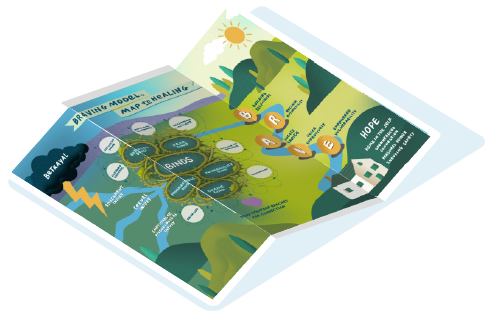
In two days, you’ll gain a fundamentally different way of understanding the clinical presentation of betrayed partners; including the ability to identify which phase your client is in, which injury is dominant, which bind is active, which coping strategy is presenting, and what the clinical moment is calling for. The Intensive is designed to give participants a comprehensive conceptual map of the model. Practitioner-level training in clinical implementation occurs in Track 2.
Module 1: The Clinical Landscape: Why Partner Betrayal Trauma Demands a New Attachment-based Map. Upon completion, participants will be able to:
- Articulate the case for a specialized clinical approach to partner betrayal trauma, identifying four gaps in the current treatment field.
- Define key clinical terms and articulate the power and consent framework that establishes sexual betrayal as a violation of relational rights.
- Distinguish between infidelity and compulsive sexual behavior as clinical presentations and articulate how The Braving Model® is applied equally to betrayed partners impacted by either issue.
- Describe the 13 defining distinctives of The Braving Model® across four dimensions and explain how these features differentiate the model from existing approaches to treating betrayal.
- Distinguish between post-traumatic stress and mid-trauma as distinct clinical realities and articulate why applying a post-traumatic framework to active partner betrayal trauma misleads both clinician and client about the nature and trajectory of the healing process.
- Explain complex trauma as the first theoretical pillar of The Braving Model®, describing betrayal as a chronic, ongoing relational injury rather than a discrete crisis event, and identifying the seven traumatic stress reactions that cluster into emotional dysregulation and relational disconnection.
- Explain Betrayal Trauma Theory as the second theoretical pillar of The Braving Model®, including its paradigm shift away from fear-based trauma frameworks and its direct clinical applications to the model.
- Apply Attachment Theory as the third theoretical pillar and the primary clinical lens for understanding partner betrayal trauma, explaining how the rupture of the attachment bond produces relational disconnection that drives the trauma symptoms and coping strategies that present in treatment.
- Articulate the foundational clinical premise of The Braving Model®: if betrayal happens in relationship, healing must also happen in relationship and describe how this relational orientation shapes clinical decision-making from the first session forward.
Module 2: The Full Map: Clinical Architecture of Partner Betrayal Trauma. Upon completion, participants will be able to:
- Explain the betrayal bind as the central dilemma of partner betrayal trauma, describing the neurobiological conflict it creates within the betrayed partner and how that conflict plays out relationally.
- Define betrayal as an attachment event and identify the six negative outcomes it produces.
- Distinguish among the three injuries created by betrayal, describe the distinct clinical presentation of each, and identify the losses each injury produces in the domains of identity and belonging.
- Explain attachment ambivalence as the behavioral expression of contradictory impulses driven by the attachment system and the threat response system in conflict.
- Describe the four binds that emerge from the betrayal bind and the clinical presentation of each.
- Explain the relationship among fear, shame, and powerlessness as a self-reinforcing cycle clients can get stuck in and articulate why addressing one element without the others fails to produce clinical change.
- Identify the seven attachment-based coping strategies that emerge from the binds and articulate the relational need each strategy is reaching for, reframing behaviors commonly labeled as codependent, co-addicted, or resistant.
- Analyze the clinician’s own participation in the cycle, identifying the ways therapists enter it and describing how the clinician’s window of tolerance sets a ceiling on the treatment.
- Differentiate a capacity from a skill and explain why the five capacities required for healing must be built somatically rather than cognitively.
- Apply the Braving Model® Map to Healing to a clinical case, identifying the injury, bind, coping strategy, and BRAVE capacities in operation, and placing the client within the six phases of healing.
What You Receive
Your Training Package
- Certificate of Completion in the Braving Model® Intensive
- 12 Continuing Education credits (NBCC Approved)
- A Braving Model® Intensive Clinical Overview Manual.
- Access to the training recording for 12 months.
- Eligibility to enroll in the Practitioner Track. Full tuition credit ($1,000) applied toward the Practitioner Track if enrolled within 12 months.
- Certificate of Completion as a “Braving Model® Informed Partner Advocate.”
- A Braving Model® Intensive Clinical Overview Manual.
- Access to the training recording for 12 months.
Details
Format & Logistics
- Format: Live virtual via Zoom with interactive discussion.
- Schedule: 10:00 AM – 5:30 PM ET.
- Investment: $1,000 paid in full.
- Required pre-reading: The Betrayal Bind (2nd Edition) by Michelle Mays LPC, CSAT-S.
- Open to licensed clinicians, currently enrolled graduate-level clinical training students (master’s or doctoral)…, credentialed coaches (PCC/ACC), and pastoral counselors.
Requirements
To Complete the Intensive
- Complete the full live virtual intensive with cameras on.
- Participate in learning activities and assignments throughout the intensive.
Eligibility
Who Can Attend
Hold a current, active, unrestricted license to practice as a mental health professional in their state, province, or country. Qualifying licenses include but are not limited to: LPC, LMFT, LCSW, LMHC, Licensed Psychologist, Psychiatrist, Licensed Clinical Nurse Specialist in Psychiatric-Mental Health, or international equivalent.
Or be currently enrolled in a graduate-level clinical training program (master’s or doctoral) in counseling, marriage and family therapy, social work, psychology, or a related mental health discipline and be able to provide verification of enrollment.
Attest to licensure, insurance and education level.
Have current professional liability/malpractice insurance (or be covered under a training institution’s policy).
Credential Usage
Upon completion, clinicians may state that they have “completed the Braving Model® Intensive Training” in their professional materials, bios, and CVs. They may reference the training as part of their continuing education. Clinicians may not use “Practitioner,” “Certified,” or “CBMC,” or use any designation that implies practitioner-level or certification-level training in the Braving Method™. No directory listing is included.
Scope of Practice
The Intensive Training is an educational training that provides a conceptual understanding of the Braving Model® framework. It is not designed to confer clinical competency in the application of the model. Clinicians who complete it are expected to continue practicing within their existing scope of competence while integrating foundational Braving Model® concepts as appropriate to their training and experience. Clinicians are strongly encouraged to pursue the Practitioner Track before applying the full model in clinical practice.
Hold a current credential from the International Coaching Federation (ICF) or hold a Board-Certified Coach (BCC) credential from the Center for Credentialing & Education (CCE).
Be an ordained clergy member, licensed pastoral counselor, or hold a master’s degree in divinity, pastoral counseling, or ministry, with documentation of current role in a faith community or counseling setting.
Be a licensed or certified professional in an allied health field (e.g., registered nurse, occupational therapist, certified addiction counselor) with documented experience working with individuals or couples affected by betrayal or relational trauma.
Acknowledge in writing the distinction between clinical treatment and coaching/support services as it relates to partner betrayal trauma.
Transition policy: Non-clinical providers who subsequently earn a qualifying mental health license may apply to transition to the clinical track. Contact the program director for details.
Ready to map the architecture of betrayal trauma?
Live virtual · 2 days · 12 CE credits (NBCC approved) · $1,000
